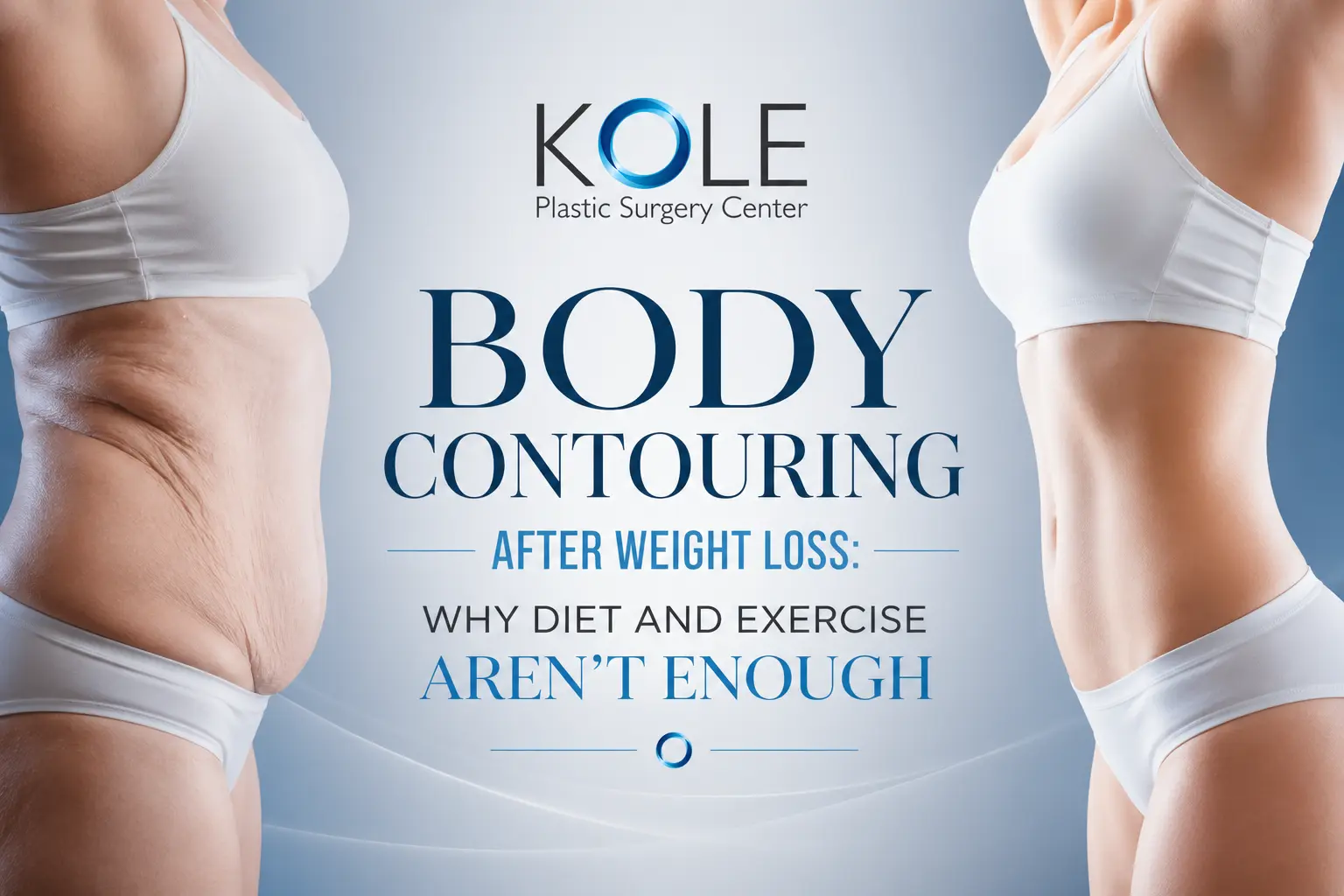
You did the hard part. You committed to losing the weight — whether through bariatric surgery, GLP-1 medications like Ozempic or Wegovy, or sheer determination with diet and exercise. The number on the scale finally reflects your effort. Your health markers have improved. By every objective measure, you succeeded.
So why doesn’t your body look the way you imagined it would?
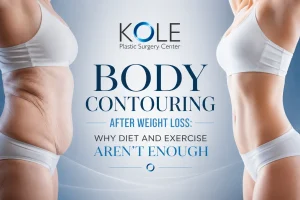
This is one of the most common concerns I hear from patients at Kole Plastic Surgery Center in Southampton, PA. They’ve lost 50, 80, sometimes over 100 pounds, and they expected to finally feel confident in their appearance. Instead, they’re left with hanging folds of skin on their abdomen, sagging arms, deflated breasts, and inner thighs that chafe with every step. They feel like they’re carrying around a constant reminder of their former body, and no matter how many more planks they do or how many more miles they run, nothing changes.
Here’s what I want you to understand: this isn’t a failure on your part. It’s simply biology. And there’s a real solution that can finally let you see the results of all that hard work.
What You’ll Learn
- The Frustrating Reality After Major Weight Loss
- Why Your Skin Can’t Bounce Back on Its Own
- What Diet and Exercise Can and Cannot Do
- Body Contouring Procedures That Actually Work
- When Is the Right Time for Body Contouring?
- Frequently Asked Questions
- Schedule Your Free Consultation
The Frustrating Reality After Major Weight Loss
When you carry excess weight for an extended period, your skin stretches to accommodate the additional volume. The collagen and elastin fibers that give skin its firmness and ability to snap back become damaged over time. Then, when you lose a significant amount of weight — particularly if that weight loss happens quickly — your skin simply cannot retract to match your new body size.
Research published by the National Institutes of Health confirms what I see in my practice every day: no amount of exercise and no available technology designed to tighten or firm the skin will eliminate hanging folds of excess tissue. Surgery alone can accomplish that. This isn’t marketing language — it’s a clinical reality that every plastic surgeon understands.
The scope of this issue has grown dramatically in recent years. According to the American Society of Plastic Surgeons, over 837,000 patients using GLP-1 weight loss medications were under the care of ASPS member surgeons in 2024 alone. Of those patients, 20% had already undergone plastic surgery to address loose skin, and another 39% were considering surgical procedures. Body contouring has become one of the fastest-growing categories in plastic surgery, and it’s not hard to understand why.
The impact of excess skin goes beyond aesthetics. A study of 124 patients seeking plastic surgery after weight loss found that 44% reported skin pain, ulcers, or infections caused by their loose skin. Patients describe chronic rashes in skin folds, difficulty with basic hygiene, and physical discomfort that actually interferes with the exercise they need to maintain their weight loss. Up to 96% of bariatric surgery patients experience some degree of excess loose skin — this is not a rare problem or an overreaction. It’s an expected outcome of significant weight loss.
Why Your Skin Can’t Bounce Back on Its Own
To understand why loose skin persists, you need to understand a little about skin biology. Your skin contains two proteins that give it structure and elasticity: collagen and elastin. Collagen provides strength and firmness, while elastin allows skin to stretch and return to its original shape. When skin is stretched beyond its capacity for too long, these proteins become damaged. The fibers break down, and the skin loses its ability to contract.
Several factors determine how much excess skin you’ll have after weight loss. The amount of weight lost matters — someone who loses 100 pounds will typically have more loose skin than someone who loses 40. The speed of weight loss plays a role too. Rapid weight loss, like what many patients experience with GLP-1 medications or bariatric surgery, doesn’t give skin time to gradually adjust. Age is another factor. As we get older, we naturally produce less collagen, so older patients tend to have less skin elasticity to begin with. Genetics also influence how your skin responds, and there’s unfortunately not much you can do about that.
Research shows that patients who undergo bariatric surgery actually form less new collagen than younger, healthy individuals, and the collagen they do produce isn’t as strong. This explains why waiting and hoping your skin will eventually tighten on its own rarely produces the results patients are looking for.
What Diet and Exercise Can and Cannot Do
I want to be clear about something: maintaining a healthy diet and regular exercise program is absolutely essential after weight loss. Strength training builds muscle that can fill some of the space left by lost fat, which may modestly improve the appearance of loose skin. Proper nutrition supports overall skin health. Staying hydrated keeps skin supple. These habits matter for your long-term health and weight maintenance.
But there are biological limitations that no workout routine can overcome. Building muscle cannot eliminate a hanging apron of abdominal skin. Cardiovascular exercise won’t tighten sagging upper arms. Planks and crunches cannot address deflated breasts or inner thighs with redundant tissue. The skin itself is the problem, and adding muscle underneath doesn’t make that excess skin disappear.
I’ve had patients come to me after years of dedicated gym work, frustrated that they still can’t wear the clothes they want or feel comfortable at the beach. They wonder what they’re doing wrong. The answer is nothing — they’ve done everything right. The loose skin simply isn’t something exercise can fix, and accepting that reality is the first step toward actually solving the problem.
This is why body contouring procedures exist. They address what diet and exercise cannot: the removal of excess skin and tissue that remains after the fat is gone.
Body Contouring Procedures That Actually Work
Body contouring encompasses several surgical procedures designed to remove excess skin and reshape the body after weight loss. The specific procedures recommended depend on where your loose skin is located and how much needs to be addressed. During a consultation at Kole Plastic Surgery Center, I evaluate each patient individually and develop a customized surgical plan.
A tummy tuck, or abdominoplasty, is one of the most common procedures for weight loss patients. It removes excess skin and fat from the abdomen and tightens the underlying abdominal muscles. For patients with significant weight loss, a full tummy tuck addresses the entire midsection, while some patients may be candidates for a mini tummy tuck that focuses on the area below the navel.
A lower body lift goes further, addressing excess skin on the abdomen, hips, buttocks, and outer thighs in a single procedure. This is often ideal for patients who have lost 100 pounds or more and have loose skin distributed around their entire lower torso.
An arm lift, or brachioplasty, removes hanging skin from the upper arms — what patients often call “bat wings.” This is one of the most requested procedures among weight loss patients because the upper arms are so visible and difficult to hide with clothing.
A thigh lift addresses sagging skin on the inner or outer thighs, improving both appearance and the physical discomfort of thighs rubbing together. Breast procedures including breast lifts and breast reduction can restore shape and position to breasts that have deflated or sagged after weight loss.
Many patients benefit from combining procedures, which I call a post-weight loss body contouring plan. By addressing multiple areas in a coordinated way — sometimes in a single surgery, sometimes staged over multiple procedures — we can achieve comprehensive results that truly reflect your weight loss achievement.
When Is the Right Time for Body Contouring?
Timing matters when it comes to body contouring surgery. I recommend patients wait until their weight has been stable for at least six months to a year before proceeding with surgery. This allows your skin to retract as much as it naturally will, gives us an accurate picture of how much excess tissue remains, and reduces the risk of needing revision surgery if additional weight loss occurs.
For patients who began GLP-1 medications in late 2024 or 2025 and have now reached their goal weight, 2026 is an excellent time to schedule a consultation and begin planning. If you’ve maintained a stable weight through bariatric surgery or traditional weight loss methods, the same principle applies — once your weight has plateaued, you’re ready to discuss your options.
During your consultation at Kole Plastic Surgery Center, I personally meet with every patient to examine their specific concerns, explain the procedures that would address their needs, and answer all questions thoroughly. I use drawings and detailed explanations so you understand exactly what to expect. As a double board-certified plastic surgeon with over 25 years of experience, I’ve helped countless patients in the Bucks County and Greater Philadelphia area complete their weight loss transformation with body contouring.
All procedures are performed in our private, PA Department of Health licensed ambulatory surgical center — the only facility of its kind in the area. Operating since 2005, our center provides a calm, comfortable environment with one-on-one nursing care and board-certified anesthesiologists. Many patients tell us that having their procedure here rather than in a hospital setting made their entire experience less stressful.
Frequently Asked Questions
Why can’t exercise eliminate loose skin after weight loss? Exercise builds muscle and burns fat, but it cannot remove excess skin tissue. When skin has been stretched beyond its elastic capacity, the collagen and elastin fibers are damaged and cannot fully retract. Building muscle can modestly improve the appearance of loose skin by filling some space underneath, but it cannot eliminate hanging folds of tissue. According to research published by the NIH, surgery is the only effective solution for significant excess skin.
How much weight do I need to lose before body contouring is recommended? Body contouring can benefit patients who have lost as little as 30-40 pounds if they have stubborn loose skin that bothers them. However, the procedure is most commonly recommended for patients who have lost 50 pounds or more, particularly those who have undergone bariatric surgery or used GLP-1 medications and lost 80-100+ pounds. During your consultation, Dr. Kole will evaluate your specific situation and recommend appropriate procedures.
How long should I wait after reaching my goal weight before having surgery? I recommend waiting until your weight has been stable for at least 6-12 months before body contouring surgery. This allows your skin to retract as much as it naturally will and ensures we can accurately assess how much excess tissue needs to be removed. Proceeding too early increases the risk of needing revision surgery if additional weight loss occurs.
What body contouring procedures are available for weight loss patients? Common procedures include tummy tuck (abdominoplasty), lower body lift, arm lift (brachioplasty), thigh lift, and breast lift or reduction. Many patients benefit from combining procedures to address multiple areas. Dr. Kole develops a customized surgical plan for each patient based on their specific concerns and goals.
How much does body contouring cost in Bucks County? Costs vary depending on which procedures are performed, their complexity, and whether multiple procedures are combined. During your free consultation at Kole Plastic Surgery Center, all costs are discussed transparently with no obligation. Because procedures are performed in our private licensed surgical center rather than a hospital, costs are often lower than hospital-based alternatives. Financing options through CareCredit, United Medical Credit, and Advanced Care are available.
Is body contouring covered by insurance? Most body contouring procedures are considered cosmetic and are not covered by insurance. However, panniculectomy — the removal of a large hanging abdominal skin apron that causes documented medical problems such as rashes, infections, or mobility limitations — may qualify for coverage with documented medical necessity. We can help you understand your options during your consultation.
What is recovery like after body contouring surgery? Recovery varies by procedure. Most patients can move around within the first day and return to light activities within 1-2 weeks. Full recovery typically takes 4-8 weeks depending on the extent of surgery. Dr. Kole provides detailed recovery instructions and personally follows up with every patient after surgery. Procedures are performed in our private surgical center with one-on-one nursing care for a comfortable experience.
Can I have multiple body contouring procedures at once? Yes, many patients benefit from combining procedures, which reduces overall recovery time compared to having separate surgeries. However, safety is always the priority. Dr. Kole evaluates each patient to determine what can be safely accomplished in a single surgery versus what should be staged over multiple procedures.
Will I have visible scars after body contouring? Yes, body contouring procedures involve incisions that result in scars. However, Dr. Kole places incisions strategically so they can be hidden by underwear or swimwear whenever possible. Scars fade significantly over time, and most patients feel the improvement in their body contour far outweighs the presence of scars.
Does Dr. Kole offer free consultations for body contouring? Yes. Dr. Kole offers complimentary, no-obligation consultations for all procedures. He personally meets with every patient to evaluate their concerns, examine their anatomy, explain their options, and answer all questions thoroughly. Call (215) 315-7655 to schedule your consultation at our Southampton, PA office.
Summary
Losing a significant amount of weight is a tremendous accomplishment, but loose skin is a common reality that diet and exercise simply cannot address. Here’s what to remember:
- Up to 96% of bariatric surgery patients experience excess loose skin that won’t improve with exercise alone
- Damaged collagen and elastin fibers prevent skin from retracting after major weight loss
- 44% of weight loss patients report skin pain, ulcers, or infections from excess skin
- Body contouring procedures including tummy tuck, body lift, arm lift, and thigh lift remove excess tissue and reshape the body
- Waiting until your weight is stable for 6-12 months produces the best surgical outcomes
If you’ve worked hard to lose weight and are frustrated that your body doesn’t reflect your achievement, you’re not alone — and you’re not out of options. Body contouring can finally let you see the results of all that effort.
Contact Kole Plastic Surgery Center today to schedule your free consultation with Dr. Edward Kole, a double board-certified plastic surgeon. Call (215) 315-7655 or visit us at 1122 Street Road, Suite 100, Southampton, PA 18966. We serve patients throughout Bucks County, Montgomery County, Philadelphia, Newtown, Langhorne, Doylestown, and the Greater Delaware Valley.